
There are many RUST crates but fews are production-grade. These are few good one:
- Rand: Random Number Generator
- Enviroment Logger: Nice Looking Logs at Enviroment Levels
- Lazy Static: Allow static variables Lazy Initialization
- Struct Opt: Parse Command Line Argument
Be able to store and retrieve data also essential and RUST ecosystem provides Crates for different data format like TOML, JSON, XML as well as databases like SQLite, PostgreSQL, Redis.
These are few packages to parse data file format:
- TOML: File format for Project Configuration
- Serde: Serialize and Deserialize RUST Data Structures
- Serde Derive: Provide Addtional Custom-Derive
- Serde JSON: JSON serialization File Format
- XML-RS: Library in pure Rust to parse XML data
Many database options are available in the market that could be catagorized into three main types:
- Single-user single-file database like SQLite and Microsoft Access.
- DBMS - Database Management System like Oracle, Microsoft SQL Server, IBM DB2, MySQL, PostgreSQL, MongoDB.
- Key-value Store like Redis.
Crate.IO provides packages for these popular database options.
- Rust SQLite: An ergonomic wrapper for SQLite.
- Postgres: PostgreSQL support for Rust.
- Redis: Redis-rs is a high level redis library for Rust.
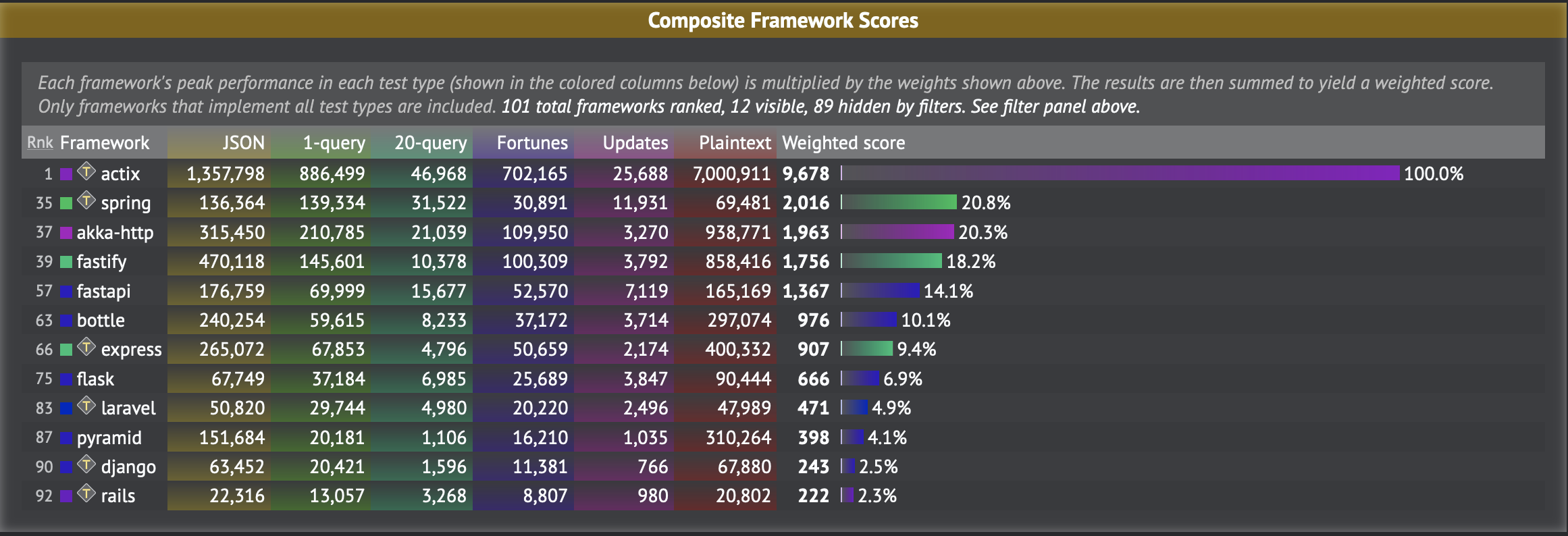
In order to build web interface for our data, we will need web application frameworks. There are many robust web frameworks in the market for this task.
- Ruby on Rails for Ruby.
- Django for Python.
- Laravel for PHP.
- Spring for Java.
- Node and React for Javascript.
Rust also has 2 bleeding edge and unstable frameworks to develop web interface